Serving San Mateo, CA and surrounding areas. (650) 753-8786
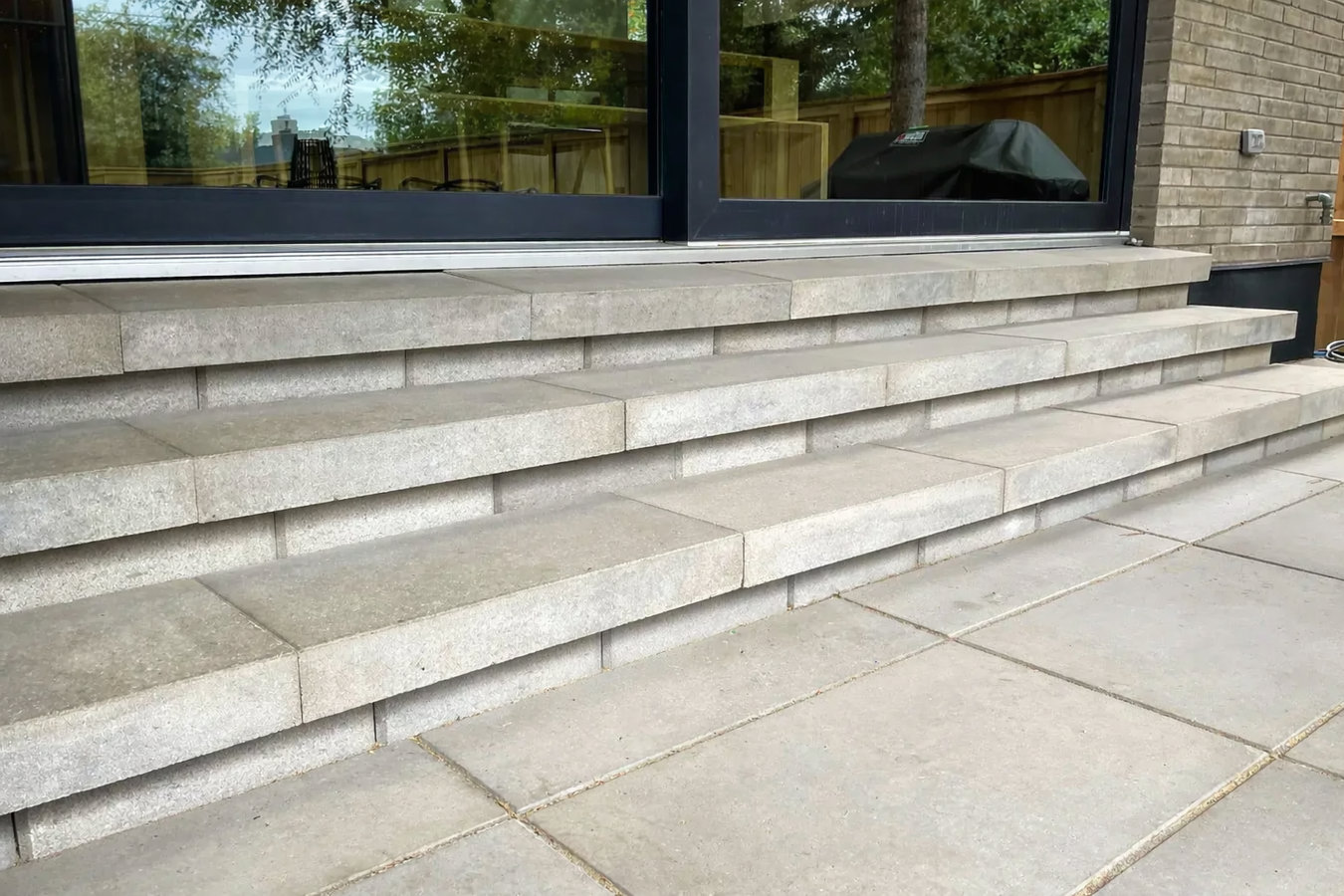
Cracked, tilted, or slippery steps are a trip hazard that gets worse every rainy season. We build concrete steps that are level, grippy, and built to handle Bay Area soil movement for decades.
Concrete steps construction in San Mateo typically takes one to two days of active work for a standard three-to-five step entry - one day to form and pour, then a waiting period of at least 24 to 48 hours before anyone uses them, with full strength developing over about a month.
Steps are one of the most visible parts of your home and one of the most used. If yours are cracked, tilting, or slippery when the morning fog rolls in, they are both a cosmetic problem and a safety concern. A large share of San Mateo's homes were built in the 1950s and 1960s, and original concrete steps from that era have often been patched so many times that replacement makes more sense than another repair. We also handle concrete retaining walls for properties where grade changes connect to the new steps, so the whole entry can be addressed in one project.
We manage permits with the City of San Mateo, build a proper compacted gravel base under every set of steps, and finish the surface with a texture that stays safe when wet. That is how steps should be built here - and it is what separates work that lasts from work that needs attention again in a few years.
Cracks wider than a hairline - especially ones that run all the way through a step or along the front edge - indicate the structural integrity is compromised. In San Mateo, this kind of cracking often accelerates after a wet winter, when water gets into small cracks and forces them wider during temperature swings. Once cracks reach a certain size, patching is a short-term fix at best.
Stand at the bottom of your steps and look across the surface from the side. If any step is noticeably higher or lower on one side, or the whole staircase has shifted away from the house, the base underneath has moved. This is common in older San Mateo neighborhoods where clay soils expand and contract with the rainy season. Uneven steps are also a trip hazard that should not be left alone.
If the top layer of concrete is peeling away in chunks or flaking like old paint, the surface has started to deteriorate. This often happens when steps were never sealed or when the original concrete mix was too wet. You will notice it first on the nose of each step - the front edge that takes the most foot traffic and weather exposure.
San Mateo's coastal fog keeps surfaces damp well into the morning for much of the year. If your steps feel slick when you head out in the morning, the surface finish has worn smooth. This is a safety issue, especially for older family members. New steps can be finished with a broom texture that stays grippy even when wet.
We build new concrete steps for front entries, side yards, and backyard grade changes - and we demolish and replace original steps that have reached the end of their life. Every project includes demolition of the old concrete, a compacted gravel sub-base, properly formed steps with a slip-resistant broom finish, and sealing before we leave the site. For properties where a grade change requires both steps and a wall, we coordinate concrete retaining walls so the entire landscape connection is addressed together.
For projects where new steps connect to a larger slab or foundation area, our slab foundation building service ensures the base work is consistent across both scopes. We handle permits, schedule the city inspection, and walk the finished project with you before closing out. If you have an HOA, we ask about design guidelines before finalizing any finish or color choice, so you are not dealing with a dispute after the concrete has hardened.
Best for homeowners with older steps that have cracked, tilted, or deteriorated past the point where patching makes sense.
Suited to backyards or side yards where a level change exists but no steps currently connect the two areas safely.
An option for homeowners who want the look of stone or textured concrete at the entry without sacrificing durability.
The right choice when your entry involves a sloped or tiered yard where walls and steps need to work together as a system.
San Mateo has one of the older housing stocks on the Peninsula - many homes in neighborhoods like Baywood, Beresford, and the Hayward Park area were built between the 1940s and 1960s. Steps from that era are often original concrete that has been patched repeatedly over the decades, and the underlying ground prep rarely met modern standards. Replacing them is usually more cost-effective than continuing to patch, but the replacement needs to account for local soil conditions - particularly the clay-heavy ground common in parts of the city that swells with winter rain and shrinks in summer. Homeowners in San Carlos, CA deal with the same older housing stock and soil conditions, and we bring the same preparation approach to every project in both cities.
San Mateo's coastal fog is also a factor that most national guides do not account for. Steps that feel dry by midday are often damp in the morning, and a smooth or worn surface becomes genuinely slippery during those hours. We always finish with a broom texture that gives footwear something to grip, even when the fog has not fully burned off. In Burlingame, CA and throughout the Peninsula, that finish choice makes a practical difference every single morning. For guidance on concrete installation standards that apply to projects here, the American Concrete Institute publishes the industry specifications that reputable contractors follow.
Reach out by phone or through the contact form and describe what you need - front entry, side yard, number of steps, and whether you are replacing existing ones or building new. We ask a few quick questions to prepare for the site visit and respond to all new inquiries within one business day.
We visit your property, measure the space, check the existing steps and the ground beneath them, and look for any complications - gas meters, irrigation lines, or tight access. You get a written quote that breaks down the work and cost by task, with a clear explanation of what is included. This is the right time to ask about permit requirements and finish options.
For most front-entry step projects in San Mateo, we pull a building permit from the city before work begins. Permitting typically adds a few days to a couple of weeks depending on the city's current workload. We handle the paperwork and keep you updated. Once the permit is approved, you get a confirmed start date.
Day one is demolition and base preparation - noisy but fast. Day two is the pour, finish, and cleanup. For permitted projects, a city inspector signs off on the work before we close out. We walk the finished steps with you, confirm the cure timeline, and explain when to apply a sealer for long-term protection.
Written quote, no obligation, permits handled. We reply within one business day.
(650) 753-8786We excavate properly and install a compacted gravel sub-base on every project - not just when the soil looks soft. In San Mateo's clay-heavy neighborhoods, that extra base work is what keeps steps from cracking and tilting through the wet-dry cycles that are hard on concrete every year.
We handle the City of San Mateo permit application and inspector coordination so the work is documented as code-compliant. That record matters if you sell your home and a buyer asks about the steps. You can verify California contractor licenses at the California Contractors State License Board before signing anything.
Every set of steps we pour gets a broom finish by default - a textured surface that stays grippy when San Mateo's morning fog leaves everything damp. We do not offer smooth finishes for entry steps because we know what the climate here actually requires. The finish choice is not an upsell; it is the right call for this city.
A large share of San Mateo homes were built before 1970, and steps from that era often sit on inadequate bases with no sealing history. We have replaced original steps in Baywood, Beresford, and the Hayward Park area and know the complications that come with older properties - narrow access paths, original tile at the entry, and adjacent landscaping that needs protecting.
Our steps last because we address the three things that most often cause failure here: an inadequate base, a surface that was never sealed, and a finish that becomes slippery in the climate we actually have. Get those three things right and you should not need to think about your steps again for decades.
For projects that require new structural concrete at grade level, a properly engineered slab foundation starts everything off right.
Learn MorePair new steps with a concrete retaining wall to create level, accessible terraces from a sloped yard.
Learn MoreThe dry season books fast - get your estimate in now and lock in your start date before the fall rush.