Serving San Mateo, CA and surrounding areas. (650) 753-8786
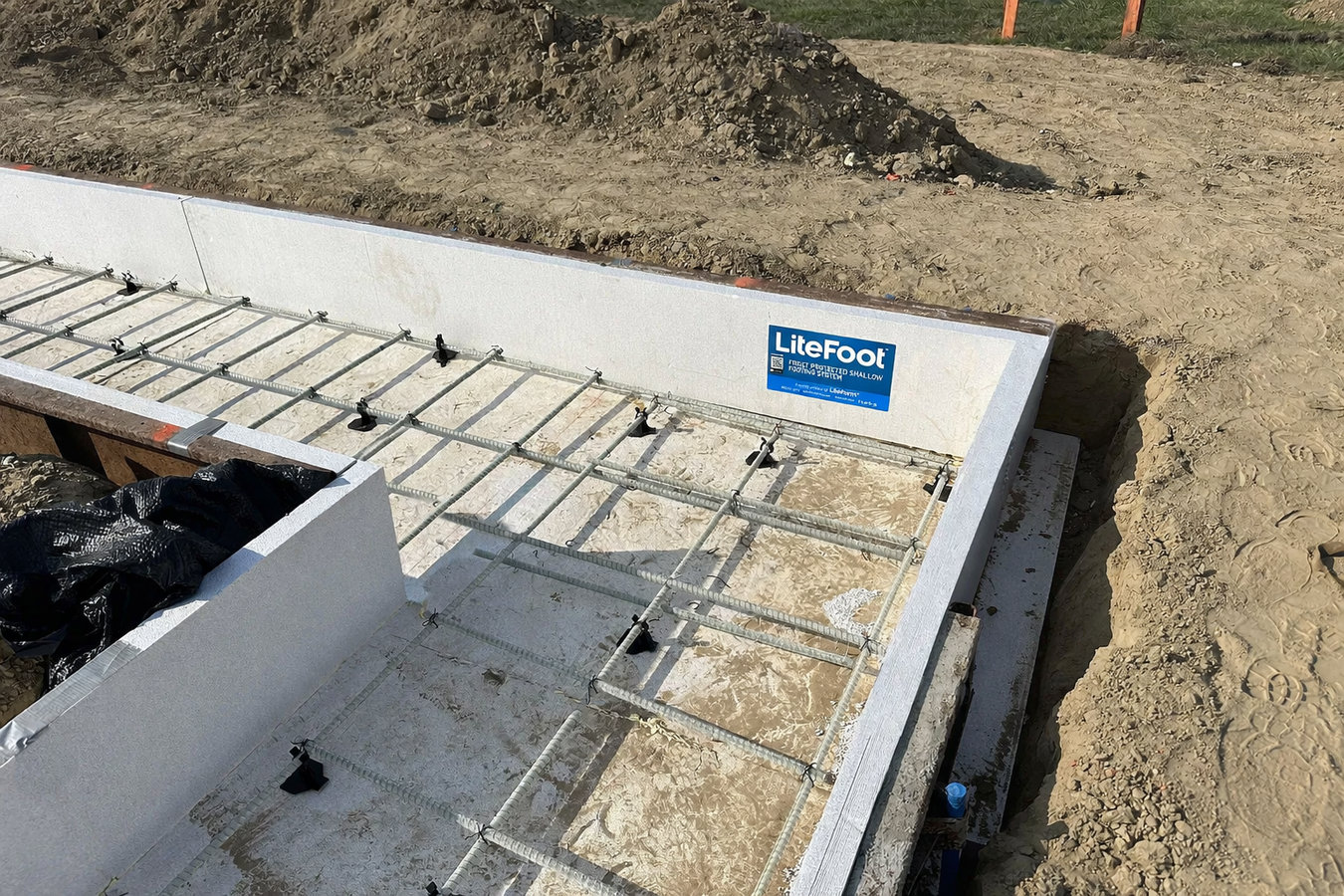
Footings built for earthquake country and Bay Area clay soils - sized correctly, reinforced with steel, and inspected by the city before anything gets built on top.
Concrete footings in San Mateo are the underground base that holds up everything above them - a deck, an addition, a retaining wall, or a new accessory dwelling unit - most residential footing projects involve one to two days of active work plus a permit process and curing period, with the full timeline from hire to ready-to-build typically running three to five weeks.
Most homeowners never think about their footings until something above them starts to shift. If a deck is pulling away from the house, a garage conversion is on the drawing board, or any new structure is being planned, footings are where the project starts - and where corners should not be cut. In San Mateo, the combination of clay soils and seismic activity means footings have to be designed for more than just downward load. We also coordinate foundation installation for projects that require a complete foundation system rather than individual footings.
We handle permits through the City of San Mateo Building Division and coordinate all required inspections. That process adds a little time to the timeline, but it means an independent inspector confirms the work is correct before anything is built on top of it - which is worth a lot in a city where building correctly the first time matters.
If you can see a gap opening up between your deck and the exterior wall, or if the steps feel like they are tilting away from the door, the footings underneath may have shifted or settled. In San Mateo's clay-heavy soils, this kind of movement is common after a series of wet winters followed by a dry summer. It is worth having a contractor look at the footings before the gap gets any wider.
Any time you add a new structure to your property - even a modest backyard deck or a detached garage - new footings are required by the city. This is not optional, and the city will check for them during the permit inspection. If you are in the planning stage, getting a footing estimate early helps you budget accurately before committing to the full project.
Hairline cracks in concrete are normal, but cracks wider than a pencil tip, running diagonally, or appearing to grow over time can signal that footings beneath are no longer doing their job. San Mateo's seismic activity and shifting soils can accelerate this kind of damage. A contractor can tell you quickly whether what you are seeing is cosmetic or structural.
When footings shift, the structure above them shifts too - and one of the first places you notice it is in doors and windows. If a door that used to swing freely now drags on the floor, or a window that opened easily now sticks, the frame may have racked slightly because the foundation beneath it has moved. This is especially common in older San Mateo homes built before modern seismic standards.
We pour concrete footings for residential decks, additions, retaining walls, accessory dwelling units, and outbuildings across San Mateo. Every project includes a site assessment, permit application to the City of San Mateo Building Division, digging to the required depth, forming, steel reinforcement, the pour, and coordination of the city inspection. We size the footings and reinforcement for the actual load they will carry and for the seismic and soil conditions at your specific address. When a project requires both footings and a full foundation system, we offer foundation installation as a coordinated scope.
For older San Mateo homes where existing footings may not meet current requirements, we assess what is already there before giving you a number. In many cases, existing footings can be supplemented rather than fully replaced - we will tell you which option makes sense for your project and why. If the scope grows into full structural foundation work, our foundation raising service covers situations where settlement has advanced beyond what new footings alone can address.
Designed for homeowners adding or replacing a deck, front porch, or covered patio that requires code-compliant structural support.
Suited to property owners building a room addition, garage conversion, or accessory dwelling unit that needs new footings or supplemented existing ones.
The right base for concrete retaining walls on sloped lots, where soil pressure and seismic loading both have to be accounted for in the footing design.
For San Mateo homes built in the 1940s through 1970s where existing footings need evaluation before any new construction begins above them.
San Mateo sits close to both the San Andreas and Hayward faults, which means footings here carry a lateral load from potential ground shaking in addition to the vertical load from whatever is built above. Contractors who do not account for that connection - between the footing, the anchor bolts, and the framing above - are building to an incomplete standard for this area. City inspectors here know what to look for, and a footing that does not meet seismic connection requirements will not pass inspection. A large share of San Mateo's homes were also built between the 1940s and the 1970s, when seismic standards were significantly less demanding than they are today, which is why assessment of existing footings is often necessary before any new addition or conversion starts. Homeowners in Belmont, CA face the same combination of older housing stock and active seismic zone, and we bring the same evaluation approach to every site on the Peninsula.
The clay-heavy soil under much of San Mateo adds a second layer of complexity. This soil swells when it absorbs winter rain and shrinks back in the dry season, putting stress on whatever is sitting in it. Footings that were dug to a shallow depth or poured without adequate width to spread the load can shift over years of this seasonal movement. We dig to stable soil depth and design footing width based on your actual soil conditions - not a generic default. Property owners in San Carlos, CA deal with the same Peninsula soil behavior, and we apply the same depth-and-width assessment to every project in both cities. For the science behind seismic hazard mapping in our area, the California Geological Survey maintains the most current data.
We ask a few questions upfront - what you are building, roughly where on the property it will go, and whether you have started the permit process. Most footing projects get a site visit before we give you a firm number, because access, soil, and slope all affect cost. We reply within one business day.
After the site visit, you receive a written estimate broken down by labor, materials, and permit fee. Once you are ready to proceed, we submit the permit application to the City of San Mateo Building Division. Approval typically takes one to three weeks depending on the city's workload.
The crew marks footing locations, digs to the required depth, sets up wooden forms, and places steel reinforcement before the pour. This is the most active phase - usually one to two days for a typical residential project.
Concrete is poured and the city inspector visits to confirm the work matches the approved plan. After the pour, the footings need about a week to harden enough for the next construction phase. We coordinate the inspection appointment and let you know when the site is ready to build on.
Free on-site estimate, permits handled, inspections coordinated - no surprises before we dig.
(650) 753-8786San Mateo city inspectors look specifically at the anchor bolt and hold-down hardware that ties footings to the structure above. We build those connections to meet current seismic requirements every time - not just the minimum that might slide through. The American Concrete Institute sets the structural standards we follow on every pour. American Concrete Institute
A large share of San Mateo homes were built before 1975, and footings from that era often need assessment before anything new is built above them. We look at what is already there before we give you a price, so you know the full picture - not just the cost of new footings without accounting for what might need to change with the existing ones.
We submit the City of San Mateo permit application, coordinate the inspector's visit, and handle any follow-up the city requires. You do not have to figure out the permit office yourself. When the project is done, you receive documentation showing the work was inspected and signed off - which matters when you sell or refinance.
Footing projects can have real variation in cost depending on depth, access, soil conditions, and the number of footings needed. We break every estimate down by line item so you can see exactly what you are paying for and compare it fairly with any other bids. No single lump-sum number that hides where the money goes.
Footings are the part of a project no one sees once the work is done, but they determine whether everything above them stays level and solid for decades. We build them to the standard San Mateo's soils and seismic zone actually require.
When footings alone are not enough and a full foundation lift is needed, foundation raising addresses settlement and structural movement at a deeper level.
Learn MoreFor new structures that need a complete foundation system rather than individual footings, foundation installation covers the full scope.
Learn MorePermit approval can take several weeks - reach out now so the timeline works for your construction schedule.